
GOVT. ENACTED ‘UNCONSTITUTIONAL’ BUDGETS, SAYS SC
Ruling expected to impact on credibility of VP impeachment trial
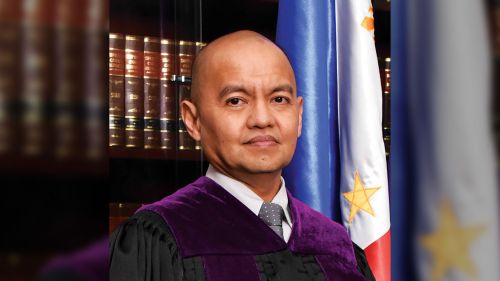
The government and both chambers of Congress are now in a quandary on how to credibly explain away the legality and constitutionality of the national budgets enacted and implemented during the past three years after the Supreme Court found provisions of the 2024, 2025, and 2026 general appropriations as “unconstitutional.”
In a 121-page decision dated October 7 and released October 20, the Supreme Court, through Senior Associate Justice Marvic Leonen’s ponencia, declared the 2024 and 2025 General Appropriations Act (GAA) unconstitutional, as well as certain provisions of the GAA for 2026.
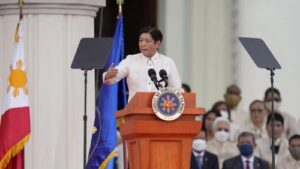
For 2024, the highest court said Congress increased the President’s proposed unprogrammed appropriations by ₱449.5 billion. but which President Marcos Jr. later approved under RA 11975.
The SC ruling also raises the question as to “who” should initiate the filing of the appropriate criminal and administrative charges against all those who took part in the preparation, deliberation and approval of the country’s budget for the last 3 years for the sake of accountability.
Also struck down as unconstitutional are the GAA for 2025 after Congress increased the Special Road Fund by ₱17.99 billion, as well as Special Provisions 1(a) and (b), Chapter 63 (XLIII) of the present (2026) national budget.
All these pertained to Congress’ decision to increase the funding for ‘Unprogrammed Appropriations’ well above the amount President Marcos Junior requested but which he all approved in the end.
Majority of the justices opined that unprogrammed appropriations are not unconstitutional per se.
“However, this budgetary item needs clear limits and safeguards to preserve fiscal discipline, transparency, and accountability.
“They become constitutionally infirm when they lack sufficient standards, effectively granting the Executive unchecked spending authority that weakens fiscal discipline and undermines funding for programmed projects when estimated government revenues are not realized,” the Court declared.
The Court also heavily criticized the unprogrammed appropriations under Congress’ ‘SAGIP’ (Strengthening Assistance for Government Infrastructure and Social Programs) program under the 2024 and 2025 GAA as a “prohibited lump sum appropriation” as it gives the Executive post-enactment identification/allocative powers, which are constitutionally vested in Congress. “As such, it became the covert repository of lump sum allocations for DPWH infrastructure like flood control projects,” it noted.
SAGIP has been used by the Romualdez-led Congress not only as a lump sum repository for its members’ questionable flood control projects but, as a tool to curry political gravitas from voters over the past two budget cycles (2024 and 2025). It was removed in the 2026 GAA due to public outcry.
The decision responds to the consolidated petitions filed by four petitioners before the court—G.R. 271059; G.R. 271347; E-02472; and E-04036.
Warnings and criticisms went unheeded.
G.R. 271059 and G.R. 271347 that questioned the 2024 national budget were filed by Rep. Edcel Lagman, his daughter Rep. Krisel Lagman, Rep. Gabriel Bordado, Rep. Mujiv Hataman and former House Speaker Pantaleon Alvarez and Senator Aquilino ‘Koko’ Pimentel III, respectively. Both were then consolidated by the SC into one petition.
It can be recalled that prior to the petitions, the 2024 GAA had already been questioned by Vice President Sara Duterte, her father, former president Rodrigo Duterte and other sectors over the ballooning of the unprogrammed appropriations and allegations of “mismanagement.” Unyielding, however, President Marcos still approved it under RA 11975.
E-02472 was filed by ‘Filipinos for Peace, Justice and Progress Movement, Inc.’ (FPJPM) thru its president, Joseph Cadsawan and Chapter Officer Gloria Puzon.
They questioned as unconstitutional the increases in the Special Accounts in the General Fund (SAGF) and the Special Road Fund administered by the Department of Public Works and Highways (DPWH) made by the Bicameral Conference Committee (Bicam) under the 2025 GAA (RA 12116).
Former President Duterte also criticized the 2025 budget and less than 3 months later, he would be forcibly taken to The Hague to face trial before the International Criminal Court (ICC).
The petitioners noted the Bicam increased the SAGF by ₱12.754 billion, from the original request of only ₱5.53 billion, or in the final amount of ₱18.284 billion.
The Bicam also increased the Special Road Fund to ₱34.75 billion, an increase of ₱17.992 billion, from the original request of ₱16.753 billion.
The Court said while the SAGF is constitutional, its being increased by Congress and being approved by President Marcos Junior is not only unconstitutional but also violated the Administrative Code of 1987.
On the other hand, E-04046 that was subsequently consolidated with E-02472, was filed by Rep. Edgar Erice and Rep. Leila de Lima, challenging the constitutionality of Chapter XLIII of the 2026 GAA, which authorizes unprogrammed appropriations.
The Court ruled that the budgetary ceiling imposed under Article VI, Sec. 25(1) of the Constitution applies to the total of programmed and unprogrammed appropriations.
“This was true for Special Provisions 1(a) and (b) of Chapter XLIII of the 2026 GAA, hence, unconstitutional,” the ruling said, stressing:
“Pegging fiscal conditions 1(a) and (b) to any new or excess revenue, without regard to whether the whole revenue target was exceeded, departs from the unprogrammed appropriations’ original feature as a deficit neutral mechanism, undermines fiscal discipline and the coherent fiscal program contemplated in Article VII, Section 22 of the Constitution, and repudiates the Court’s ruling in Araullo v. Aquino III.
“Additionally, the provisions were overly broad, lacked prioritization standards, and partly functioned as prohibited lump sum appropriations.”
The SC also “permanently prohibited” the Executive Branch from implementing the assailed provisions of Chapter XLIII of the 2026 GAA.
But who would go after the violators?
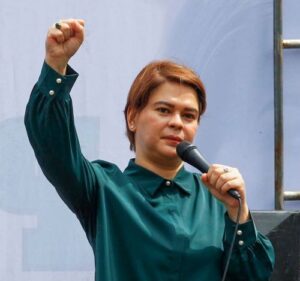
The decision also casts serious doubt on the credibility of the ongoing impeachment trial of Vice President Sara Duterte now hanging on the single accusation of ‘unexplained wealth’ as her prosecutors from Congress and the senator-judges in the impeachment trial were all involved in the enactment of the budgets that ran afoul of the Constitution, together with the Office of the President.
The SC ruling also raises the question as to “who” should initiate the filing of the appropriate criminal and administrative charges against all those who took part in the preparation, deliberation and approval of the country’s budget for the last 3 years for the sake of accountability.

Comments are closed.