

Tulfo advances energy, trade partnerships with UAE and Japan
Diplomatic engagements seek stronger energy security, wider market for PH exports
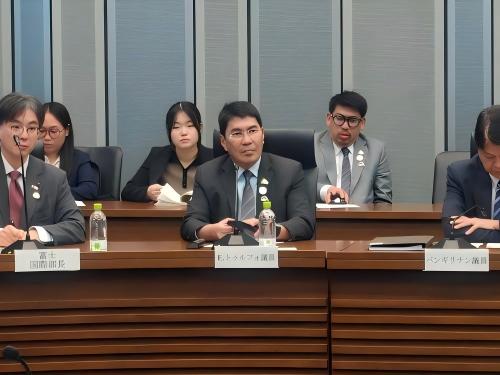
SENATOR Erwin Tulfo, chairman of the Senate Committee on Foreign Relations, is pursuing energy and trade cooperation with the United Arab Emirates (UAE) and Japan, pressing for a Philippine oil storage hub, tariff relief for exports and support for clean-energy development through diplomatic and parliamentary talks.
The engagements bring together his push for a Philippine regional oil hub and his appeals for Japanese support for energy infrastructure and Philippine exports. The proposals remain subject to further negotiations and agreement, however.
UAE oil hub proposal
During bilateral discussions in Abu Dhabi on October 29, Tulfo led a Philippine delegation seeking a partnership with the UAE through the Abu Dhabi National Oil Company (ADNOC) to develop a strategic oil storage facility that could position the Philippines as a regional oil hub.
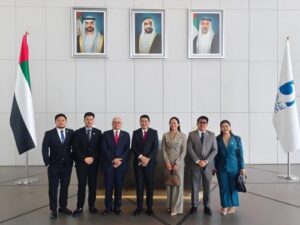
Joined by Philippine Ambassador to the UAE Alfonso Ver and Special Envoy for Trade and Investment Kathryna Yu-Pimentel, Tulfo emphasized government-to-government cooperation alongside private-sector participation.
“We have been pushing for this strategic oil hub as we see how beneficial it will be for Filipinos who are currently experiencing price shocks brought by high oil prices, because we lack access to it,” Tulfo told the UAE delegation, headed by ADNOC Chairman Sultan Ahmer Al Jaber.
A statement released by Tulfo’s office last November 1 claimed ADNOC expressed in the proposed partnership. ADNOC already supplies Petron with approximately 40,000 barrels per day.
The proposed hub could increase supply volumes, while the UAE team offered to share an existing storage contract framework for Philippine review.
The discussions identified the second quarter of 2027 as a rollout target, subject to agreement on the site, infrastructure responsibilities, commercial terms and implementation schedule.
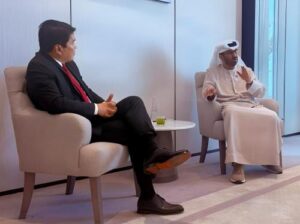
The proposed hub would anchor a broader partnership spanning crude supply, refinery investment, fuel retail networks, renewable energy and gas-to-power development.
The arrangement, if successfully concluded, could help the Philippines cushion the volatility of the oil supplies as it has no strategic petroleum reserve (SPR) of its own.
Export access in Japan
In Japan, Tulfo proposed removing tariffs on Philippine-made heated tobacco products (HTPs), fruits and other agricultural products during the Philippine senators’ parliamentary visit marking the 70th anniversary of Philippines-Japan friendship. The Senate delegation is headed by Senate President Win Gatchalian.
“With the emergence of new products from the Philippine tobacco industry and the increasing demand for them in Japan, we are respectfully asking the Japanese government to consider our proposal to exempt Philippine-made HTPs from tariffs,” Tulfo said.
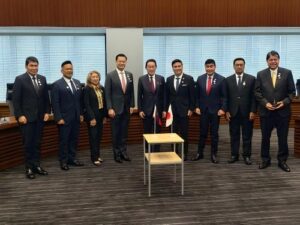
His appeal is anchored on the Philippines-Japan Economic Partnership Agreement (PJEPA) that both countries signed in 2006 under the Macapagal-Arroyo administration. The agreement went into effect 2 years later, on December 11, 2008.
Tulfo said the proposed tariff exemptions would place Philippine-made HTPs on a more equal footing with similar products from the European Union.
Energy security and green transition
Speaking during the Japan-ASEAN Inter-Parliamentary Exchange on November 6, Tulfo reaffirmed the Philippine government’s commitment to cooperation with Japan on energy security and decarbonization.
He highlighted the Economic Research Institute for ASEAN and East Asia’s (ERIA) role in developing the Philippine National Oil Company (PNOC) Industrial Park, a 530-hectare estate designed to attract energy, logistics and heavy-industry investors.
“The Philippines needs Japan’s expertise in constructing and maintaining resilient energy infrastructure. We are deeply grateful for your continued reliability as a strategic partner,” Tulfo told his Japanese counterparts.
He also assured delegates of his committee’s commitment to policy efforts supporting national energy resilience and sustainability.
“We seek to deepen our cooperation with Japan as we accelerate our transition to clean energy. With Japan’s support, we can fully unlock the potential of the Philippine renewable energy sector,” Tulfo added.
The visit included engagements with Japanese Prime Minister Takaichi Sanae, former Prime Minister Kishida Fumio, parliamentary leaders, Foreign Minister Motegi Toshimitsu, the Sasakawa Peace Foundation and the Japan-Philippines Parliamentary Friendship League.

Comments are closed.