

‘UNKNOWN’ SHAMES PH IN SEAT FOR UN SECURITY COUNCIL
Voting shows waning US global influence, PH lack of global standing and respect
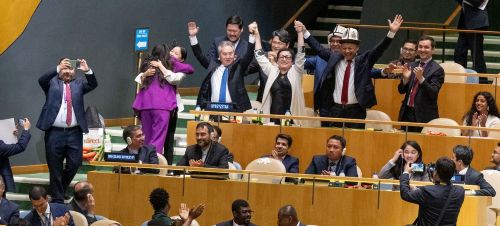
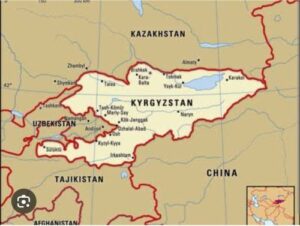
THE Philippines has suffered its worst humiliation yet in the global stage after losing massively in its campaign to become the non-permanent Asia-Pacific representative in the United Nations Security Council (UNSC) to Kyrgyzstan, a tiny country in Central Asia that most people would find hard to find in a map, much less correctly pronounced its name in the first try.
According to the official press statement released by the UN General Assembly, the voting took place last June 3 during the 86th Meeting of its 80th Session attended by all 191 members.
The final voting was not even close after Kyrgyzstan overwhelmed the Philippines by garnering 142 votes, more than the required minimum of 128 votes, while the Philippines only managed to get 49 votes.
The winner would serve for a 2-years term commencing from January 2027 up to the following year.
Last March, while the Philippines and the rest of the world are mired in crisis due to the war in the Middle East, President Marcos Jr. took time to address the UNGA to personally campaign for the country to be voted back to the UNSC.
In preparation, then Foreign Affairs Secretary Enrique Manalo was removed from his post in June 2025 and designated as the Philippines’ Permanent Representative to the UN to lay the groundwork for the country’s campaign owing to his long diplomatic experience.
In a statement after the result of the voting was known, Foreign Affairs Secretary Ma. Theresa Lazaro swallowed the humiliation, saying:
“The Philippines remains committed to working with all nations in pursuing peace, stability, sustainable development, and a rules-based international order.
“The Philippines respects the decision of the member states of the United Nations and extends its congratulations to the Kyrgyz Republic following today’s election for the non-permanent seat in the United Nations Security Council.”
Writing on the wall: US influence on global affairs on the decline
The administration’s disastrous campaign sought to mirror the country’s previous membership at the UNSC, mainly with the backing of its hegemon master, the American Empire.
The records cited by the Manila Bulletin in its report about the diplomatic disaster on June 4 noted the Philippines was previously a non-permanent member of the UNSC in 1957, 1963, 1980–1981, and 2004–2005.
The 1950s up to the 1980s covered the ‘Cold War’ years when US Imperialism was at its zenith while the 2000’s cover America’s global ‘War on Terror’ that was supported by most countries that include the Philippines under President Gloria Macapagal Arroyo.
This time however, the Philippines’ failed campaign sent the clear message that the rest of the world is no longer beholden to America, its bullying and its propaganda, and would no longer follow all its diktats. The other message is that the global community also now rejects suspected US puppets having a voice in global affairs while claiming to be a neutral country and a peacebuilder.
The UNGA voting appeared to reflect this new reality as the Philippines started losing supporters through each round of voting, indicating that unseen forces are at play to convince UN member-states to stay away from the Philippines.
In the first round, the Philippines got 85 votes, Kyrgyzstan, 105 votes; second round, Philippines, 81 votes, Kyrgyzstan, 110 votes; third round, Kyrgyzstan 123 votes, Philippines 68 votes; fourth round, Kyrgyzstan, 142 votes, Philippines 49 votes.
Another clear message that American Imperialism is a declining voice and influence in global affairs was the defeat of Germany (104 votes) to tiny Austria (131 votes) and Portugal (134 votes) on the first round of voting for two seats allocated for Western Europe and Other Countries.
Germany is America’s most loyal subject in Europe next to the United Kingdom, both of which are hosts to US military bases just like the Philippines.
The loss for the Philippines and Germany is doubly humiliating as the 80th Session was presided by Annalena Baerbock, who has also served as Germany’s Foreign Minister known for her Anti-Russia and Anti-China stance.
The first round of voting also elected Zimbabwe to represent Africa while Trinidad and Tobago would represent Latin American and the Caribbean States.
The winners will replace Denmark, Greece, Pakistan, Panama and Somalia, whose terms will expire on 31 December 2026.
They will join the Council alongside the five permanent members — China, France, Russian Federation, United Kingdom and the United States — as well as the other five non-permanent members whose terms run through the end of 2027. These are Bahrain, Colombia, Democratic Republic of the Congo, Latvia, and Liberia.

Comments are closed.