

PRA ‘rescues’ PH from logistics bottleneck; to provide cargo space
Offers 10-hectare reclaimed land in Manila as off-dock container yard

THE PHILIPPINE Reclamation Authority (PRA) under Chairman Atty. Alex Lopez has come to the rescue of the country’s logistics supply chain by agreeing to provide a temporary dockyard in Manila for haulers and truckers in a deal brokered by Cabinet Secretary Benhur Abalos.
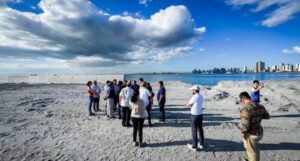
In a statement on November 20, Chairman Lopez said the temporary off-dock container facility would be located at a 10-hectare reclaimed land along Manila Bay in the North Harbor District of Manila currently under development by the PRA.
A photo release from the office of Abalos showed officials visiting the site for an actual inspection last November 13.
A joint statement from the country’s largest business organizations praised the new arrangement, particularly citing Abalos’ “decisive leadership and swift action in addressing the country’s worsening port congestion” and the PRA’s role in addressing the problem.
Among those who signed the statement dated November 20 are: The Philippine Chamber of Commerce and Industry (PCCI), Philippine Exporters Confederation (PhilExport), Employers Confederation of the Philippines (ECOP), Federation of Filipino Chinese Chambers of Commerce and Industry (FFCCCII), and Federation of Indian Chambers of Commerce and Industry (FICCI) in the Philippines.
The PRA’s suggested location directly facing North Harbor, they added, is both “innovative and practical” due to their closeness to the Port of Manila and the Manila International Container Port, the country’s main trade and commercial entry points.
“The proposed location offers two significant advantages. First, it provides much-needed space for empty containers that can no longer be accommodated in existing container yards, allowing trucks carrying these containers to be freed up and redeployed to transport import cargo.
“Second, its proximity to North Harbor facilitates the faster transfer of empty containers for loading onto outbound vessels.
“There is also potential for barges or sweeper vessels to collect empty containers directly from the reclamation area, subject to the availability of necessary facilities and regulatory approvals,” the statement stressed.
Port congestion is one unending problem
Since the Aquino administration (2010 – 2016), brokers and truckers groups headed by the Professional Customs Brokers Association of the Philippines (PCBAPI) and the Confederation of Truckers Association of the Philippines (CTAP) have been staging protests thru work stoppage over the issue of port congestion.
They put the blame squarely on the lack of local yard space for empty container returns by international shipping lines and government’s inaction to effectively address the issue under succeeding administrations.
Records show that protests by waterfront stakeholders over port congestion and government inaction took place in 2013, 2014, 2015, 2018 and 2021 with the latest happening only last October 5 to October 8.

A streamer of truckers and brokers during their protest last October 5 over port congestion (stocl photo).
The protests only subsided after Customs Commissioner Ariel Nepomuceno and Abalos promised to address their concerns thru the enactment of a ‘JAO’ (Joint Administrative Order) that seeks to give long-term solution to the problem of port congestion and the alleged questionable fees being imposed by international shipping lines.
The business groups noted that the country’s trade imbalance has resulted to the accumulation of at least 100,000 empty containers nationwide that international shippers have failed to remove.
“With limited facilities for their return and repositioning, many empty containers remain on truck chassis for extended periods, reducing the availability of trucks needed to transport incoming cargo.”
With the PRA’s initiative, the business groups said this “goes beyond providing temporary storage.”
“It addresses a major bottleneck in the movement of goods and the efficient use of transport and port facilities across the country,” they pointed out.

Comments are closed.