

2026 BELT AND ROAD FORUM SHATTERS US NARRATIVE AGAINST CHINA
Journalists’ eye-witness accounts confirm effort to counter China’s rise has failed
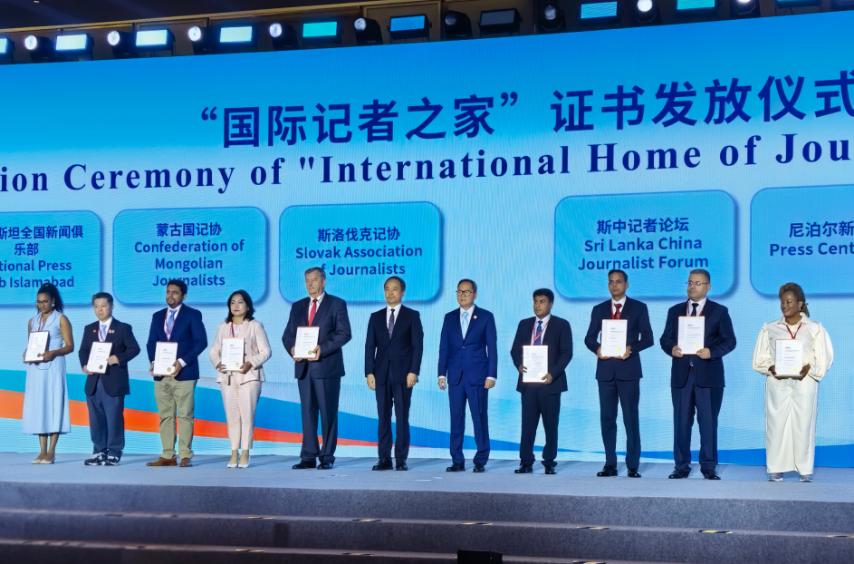
NANJING, China—THE gathering here of about 100 journalists from 57 countries for the 9th edition of the Belt and Road Initiative (BRI) Journalists Network Forum (BRJN) completely shattered US Imperialism and its Western minion’s continuing effort to counter the rise of the People’s Republic of China in the world stage.
Organized by the All-China Journalists Association (ACJA) thru the Belt and Road Journalists Network (BRJN), the weeklong event runs from October 10 to 17.
The BRJN has grown in size since its founding in 2017 to include more than 110 media organizations representing over 1.67 million media professionals— just four years after Chinese President Xi Jinping formally launched the BRI in 2013.
From the program’s brochure, participants came from Africa, Central and Southeast Asia, Australia, the Pacific Islands, South America, and Eastern and Western Europe who are reporting thru the traditional (print, broadcast, television) and digital media.
US deliberate effort to counter the rise of China
The success of the conference is despite efforts by both the US Congress and the Biden White House to counter China’s alleged global “malign influence” thru the ‘CPIF’ (Countering the People’s Republic of China Influence Fund) that totaled $1.6 billion spread over a 3-years period.
Specifically, the CPIF aims to counter China’s “efforts to reshape” the United Nations, counter its “economic coercion tactics” (specifically the BRI), counter the alleged expansion of its “authoritarian system,” counter China’s “nuclear energy efforts, military sales and exports,” and, counter China’s “development of military technology.”
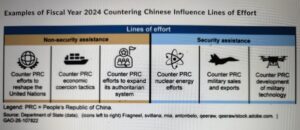
A report from the US Government Accounting Office (GAO) posted online dated June 16, 2026, matter-of-factly stated: “China and the U.S. are competing for global economic and geopolitical influence—from mining critical minerals to developing military technology.”
With this in mind, the GAO said that from 2020 to 2023, the US Congress approved a funding of $1.6 billion for a global effort to discredit China of which, $1.2 billion covering 470 projects were actually funded and administered by the State Department and the US Agency for International Development (USAID).
However, the GAO review noted that after three years, it has no idea on the overall result or impact of these projects due to poor administration and supervision of those in charge of the projects, a conclusion that points to waste of money and corruption.
“State and USAID reported funding an estimated 470 projects valued at about $1.2 billion from fiscal years 2020 to 2023, but working group officials do not have readily available and reliable data on the types and status of these projects…
“… For example, of the estimated 470 projects, officials did not provide data on time frames for 129 and lines of effort for 38. Officials also lacked data on the specific projects funded from nearly a third of the approved proposals.
“As a result, working group officials lack critical information to track how funds were used and determine whether the funding ultimately supports the activities described in approved proposals,” part of the GAO report said.
The ambiguous result, however, did not deter rabid anti-China elements in the ruling US political circle.
In 2023, anti-China lawmakers in the US Congress headed by Rep. Andy Barr (Kentucky) tried to extend the CPIF thru HR 1157 that reached the Senate in September 2024 but failed to pass at the foreign affairs committee level. It was then overtaken by events after the November elections that saw the return of President Donald Trump.
Had it become law, the US, thru USAID and the State Department, would be spending another $1.6 billion from 2023 to 2027, divided into $325 million per year to again target China, a development that would turn the recent reciprocal state visits of Trump and President Xi Jinping into a farce.
Despite this, the imprint of US’s subversive activities targeting China’s rise has remained and can still be felt and seen everywhere. During the tragic disaster that hit Nepal last August UK state-broadcaster, the BBC, falsely reported that China state media “censored” footages of the incident and that China was late in sending help to Nepal.
In the Philippines, ranking officials like Defense Secretary Gilberto Teodoro is now openly using the term China’s “malign influence” and in personally leading raids targeting Chinese steel factories in his continuing campaign to agitate Filipinos against China in line with America’s ulterior foreign policy goal of undermining China.
His effort is supported by some local NGOs and some in the mainstream media aligned with Western interests who have been working closely with the Philippine Coastguard since 2023 to stage “incidents” in the disputed portion of the South China Sea, thus subverting efforts by the executive branch to improve the country’s relationship with China.
To see is to believe
However, no amount of US-funded smears or distortions can outweigh the journalists’ firsthand experience of China’s governance and modernization during their visit.
If any, it shows the superiority of state planning down to the local level and perfected in the course of China’s 15th Five Years Plan.
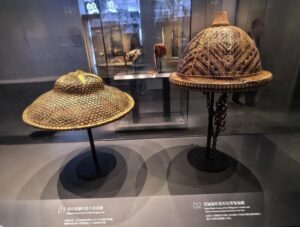
The BRJN Secretariat, in its statement said, the 2026 Forum would give participants the chance to “observe the promising start of China’s 15th Five Year Plan, get firsthand insight into China’s achievements in scientific and technological innovation, industrial development, ecological conservation, cultural preservation and rural revitalization and witness the vivid practices of Chinese modernization.”
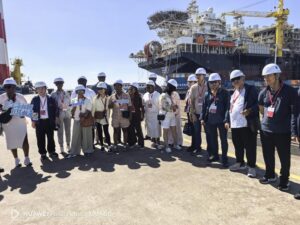
The statement did not disappoint the participants’ expectations. Visits to museums, industrial enterprises, factories and state-supported agricultural centers that run on robotics, AI-supported technology, including ‘smart agriculture,’ not only left them with a better understanding of Chinese culture and way of life but also, why China is now leading the world in progress and development.
Especially for journalists coming from the Global South that composed the majority of the delegates, China’s highly advanced and science-based agricultural techniques (‘smart agriculture’) gave them the hope that these can be replicated in their countries and help alleviate poverty that resulted from decades of failed development models given to their governments by the West in exchange for financing and official aids.

Comments are closed.